
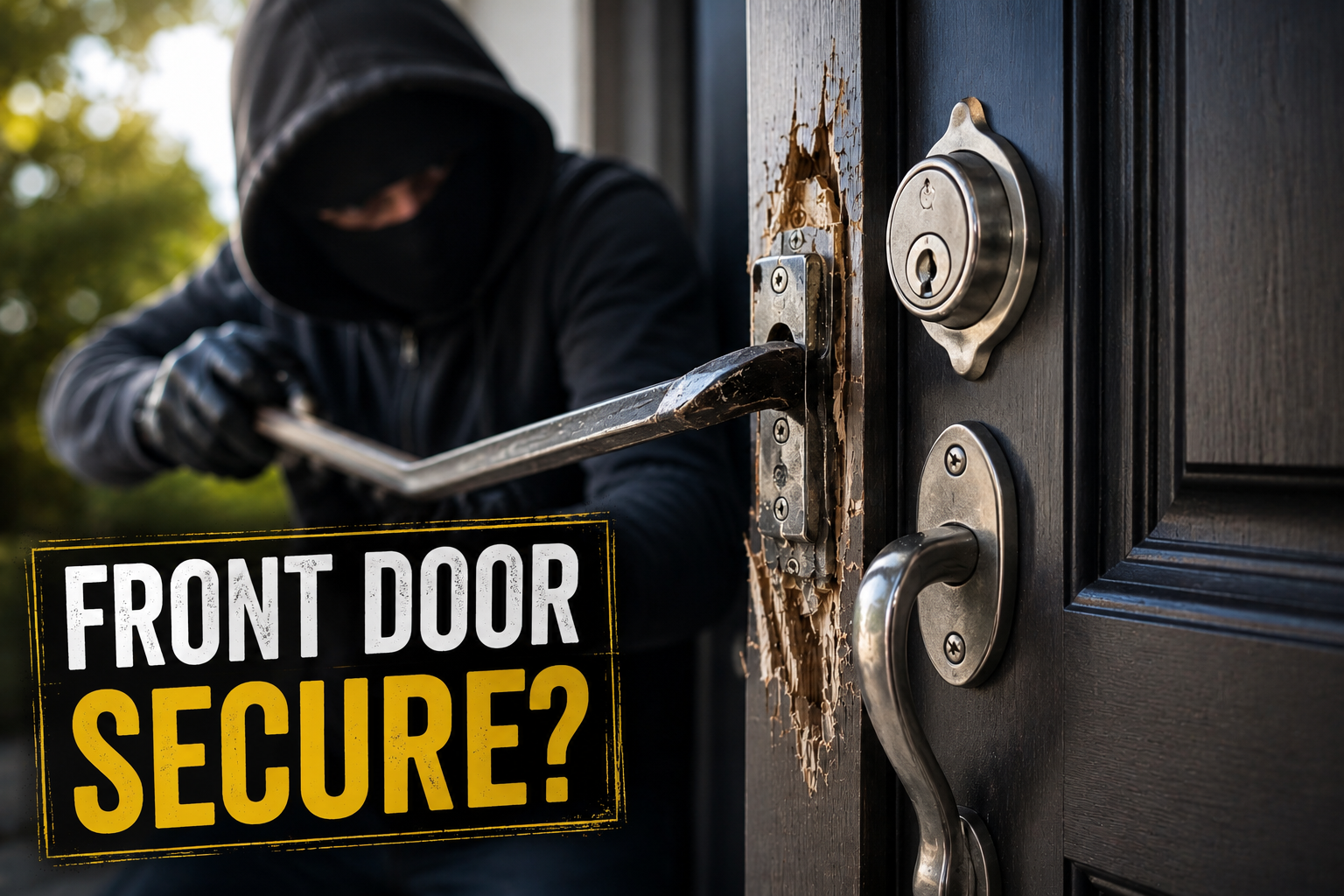
5 Signs Your Front Door Isn’t as Secure as You Think
Your Front Door Isn’t as Secure as You Think
Your front door is more than just the main entrance to your home – it’s your first line of defense against unauthorized entry. While many homeowners assume that a locked door automatically means a secure home, that’s not always the case. In reality, burglars often exploit weaknesses in the door frame, hardware, hinges, or installation rather than the lock itself.
A high-quality deadbolt won’t provide much protection if it’s attached to a weak frame. Likewise, a solid steel door can still be vulnerable if nearby glass allows someone to reach inside and unlock it. The good news is that many of these vulnerabilities are easy to identify and relatively inexpensive to fix.
Whether you own a home, rent an apartment, or manage a property, understanding what makes a front door secure can help you better protect your family, your belongings, and your peace of mind.
Why Front Doors Are a Common Target
Most residential burglaries are crimes of opportunity. Intruders typically look for homes that appear easy to enter with minimal effort and little chance of being seen. A poorly secured front door can often be breached in less than a minute using simple tools or brute force.
Contrary to what movies often portray, most burglars don’t have advanced lock-picking skills. Instead, they rely on methods that exploit weak hardware, poor installation, or neglected maintenance.
Before inspecting your own front door, it’s helpful to understand the techniques commonly used to defeat residential entry doors.
How Burglars Commonly Attack Front Doors
Different weaknesses require different attack methods. Understanding these tactics makes it easier to identify areas that deserve attention.
| Attack Method | What the Burglar Targets | Recommended Defense |
|---|---|---|
| Door kicking | Weak strike plate and door frame | Reinforced strike plate with 3-inch screws |
| Pry attack | Weak door jamb | Door jamb reinforcement kit |
| Lock bumping | Low-quality deadbolt | Grade 1 high-security deadbolt |
| Lock picking | Basic lock cylinder | Pick-resistant lock |
| Breaking nearby glass | Reach-through unlocking | Laminated glass or security window film |
| Hinge removal | Exterior hinges with removable pins | Non-removable security hinges |
Fortunately, these attacks usually depend on predictable weaknesses. By addressing those weak points, you can significantly improve your home’s resistance to forced entry.
Here are five signs your front door may not be as secure as you think.
1. Your Door Has a Basic Builder-Grade Lock
Many homes come equipped with inexpensive locks installed during construction. While these locks often meet minimum building requirements, they are designed to control costs rather than maximize security.
Builder-grade deadbolts may have:
- Lower-quality internal components
- Basic cylinders that offer limited pick resistance
- Minimal protection against lock bumping
- Short mounting screws
- Reduced durability after years of use
Because the lock is one of the few security components used every day, wear and tear can gradually reduce its effectiveness.
Understanding Lock Security Grades
Not all locks provide the same level of protection. Residential deadbolts are commonly tested under ANSI/BHMA standards.
| ANSI/BHMA Grade | Recommended For |
| Grade 1 | Highest residential security and heavy-duty use |
| Grade 2 | Most homes and residential applications |
| Grade 3 | Basic residential security |
Grade 1 deadbolts undergo the most rigorous testing for strength, durability, and resistance to forced entry. Grade 2 locks provide solid protection for most homes, while Grade 3 locks generally offer the least resistance and are commonly found in builder-grade installations.
Recommended Deadbolt Upgrades
If you’re considering replacing your existing lock, look for products with strong security ratings and proven reliability.
Popular options include:
- Schlage B62 Deadbolt
- Schlage Encode Smart Lock
- Yale Assure Lock 2
- Kwikset Halo Smart Lock
- Medeco Maxum High-Security Deadbolt
Typical cost ranges from $60 to $350, depending on features such as smart home integration, keypad access, and advanced key control.
What You Should Do
Improve your door’s security by:
- Installing a Grade 1 or Grade 2 deadbolt
- Replacing factory screws with hardened 3-inch screws
- Ensuring the deadbolt extends at least one inch into the strike plate
- Rekeying or replacing locks after moving into a new home
Remember, even the strongest deadbolt depends on the strength of the door frame supporting it.
2. The Door Frame Shows Cracks or Movement
Many people assume that burglars defeat the lock. In reality, the door frame often fails first.
When someone kicks a door, the force transfers through the deadbolt into the strike plate and surrounding wood. If the frame is weak, cracked, or improperly secured, the lock may remain intact while the frame splinters around it.
Inspect your entry door for:
- Cracks around the strike plate
- Splitting wood
- Loose trim
- Gaps between the frame and wall
- Movement when the locked door is pushed
- Screws pulling away from the frame
Even slight movement can indicate that the frame has weakened over time.
Recommended Door Reinforcement Products
Modern reinforcement kits significantly strengthen one of the most common failure points during forced entry.
Popular products include:
- Door Armor MAX
- Defender Security Door Reinforcement Kit
- StrikeMaster II Pro
- Prime-Line Door Reinforcement Plate
These systems distribute impact forces across a larger section of the frame instead of concentrating them around the lock.
Typical Costs
| Upgrade | Typical Cost |
| Reinforced strike plate | $20–40 |
| Door jamb reinforcement kit | $80–200 |
| Professional installation | $100–250 |
What You Should Do
If you notice cracks or movement:
- Replace damaged wood immediately.
- Install a reinforced strike plate.
- Secure it using 3-inch structural screws anchored into the wall studs.
- Consider installing a complete door jamb reinforcement kit if your home has an older frame.
Strengthening the frame is one of the most effective upgrades you can make because it directly addresses the point where many forced-entry attempts succeed.
3. Large Gaps Around the Door
A front door should close snugly against the frame. If you can see daylight around the edges or notice the door shifting while it’s closed, your home’s security may be compromised.
Large gaps don’t just allow drafts, insects, and moisture into your home – they can also make it easier for an intruder to manipulate the door or lock.
Potential security risks include:
- Inserting tools to manipulate the latch
- Creating leverage for pry attacks
- Reducing the effectiveness of the deadbolt
- Accelerating wear on the locking hardware
- Allowing the door to flex under force
Over time, normal settling, worn hinges, humidity, or improper installation can cause a once-secure door to become misaligned.
Signs Your Door Needs Adjustment
Inspect your front door for these common warning signs:
- Visible daylight around the edges
- Uneven gaps between the door and frame
- The deadbolt doesn’t align smoothly with the strike plate
- The door rubs against the frame
- Loose or damaged weatherstripping
- The door rattles when closed
Even small alignment issues can prevent the deadbolt from fully engaging, reducing its ability to resist forced entry.
What You Should Do
If you notice gaps around your door:
- Tighten loose hinges.
- Replace worn weatherstripping.
- Adjust the strike plate if the deadbolt doesn’t align properly.
- Repair warped frames or damaged trim.
- Install a latch guard if the latch area is exposed.
Remember, even the strongest deadbolt cannot compensate for a poorly fitted door. Security begins with a properly aligned frame that allows every component of the locking system to work as intended.
4. Glass Is Within Reach of the Lock
Decorative glass panels and sidelights can dramatically improve your home’s appearance, but they can also introduce a significant security vulnerability.
If someone can break the glass and reach the interior thumb-turn of the deadbolt, they may be able to unlock the door in seconds without damaging the lock itself.
This is especially common with:
- Decorative sidelights beside the front door
- Doors with large glass inserts
- Full-view glass storm doors
- Narrow windows installed immediately next to the lock
While modern impact-resistant glass provides greater protection, many older homes still have standard tempered or annealed glass that can be broken relatively quickly.
Security Glass Options
If replacing the entire door isn’t practical, there are several effective upgrades that can improve resistance to forced entry.
Consider:
- Professionally installed security window film
- Laminated safety glass
- Impact-resistant replacement glass
- Decorative security grilles
- Reinforced storm doors
Security window film won’t prevent the glass from breaking, but it helps hold shattered pieces together, making it much more difficult to create an opening large enough to reach through.
Typical Costs
| Upgrade | Typical Cost |
|---|---|
| Security window film | $100–400 |
| Laminated glass | $250–800 |
| Replacement sidelight | $300–1,000+ |
| New secure entry door | $700–3,000+ |
What You Should Do
If glass is within arm’s reach of your lock:
- Upgrade to laminated or impact-resistant glass.
- Apply professional-grade security window film.
- Consider relocating valuables away from visible entry points.
- If permitted by local building codes, evaluate whether a double-cylinder deadbolt is appropriate. Because these locks require a key from both sides, they may slow emergency exits and are not suitable for every home.
Your goal is to make reaching the lock as difficult and time-consuming as possible.
5. Your Door Is Solid, but the Hinges Are Exposed
Many homeowners focus exclusively on the lock while overlooking another critical component: the hinges.
If your front door swings outward and the hinge pins are exposed on the exterior, an intruder may attempt to remove the pins instead of attacking the lock.
Although many newer doors include built-in security features, older hinges often use removable pins that provide little resistance.
Inspect your hinges for:
- Removable hinge pins
- Rust or corrosion
- Loose mounting screws
- Hinges separating from the frame
- Sagging or misalignment
Loose hinges can also prevent the deadbolt from aligning correctly, reducing the overall effectiveness of the locking system.
Recommended Hinge Upgrades
Modern security hinges offer significantly greater protection.
Look for:
- Non-removable pin hinges
- Ball-bearing security hinges
- Hinges with integrated security studs
- Heavy-duty stainless steel hinges for exterior use
Security studs interlock when the door is closed, helping prevent the door from being removed even if the hinge pins are compromised.
What You Should Do
Improve hinge security by:
- Replacing standard hinges with security models.
- Tightening loose screws.
- Replacing short screws with 3-inch structural screws where appropriate.
- Inspecting hinges annually for wear, corrosion, or movement.
A secure hinge system complements your lock by protecting another common point of attack.
Most Common Front Door Security Mistakes
Even homeowners with quality locks sometimes create vulnerabilities through everyday habits.
Avoid these common mistakes:
Hiding Spare Keys Outside
Burglars know the usual hiding places, including:
- Under doormats
- Inside fake rocks
- Under flower pots
- Above door frames
- Inside mailboxes
Instead, leave a spare key with a trusted family member or use a secure lockbox.
Forgetting to Lock the Deadbolt
Many people rely only on the spring latch when leaving home.
A spring latch offers far less resistance than a properly engaged deadbolt.
Always lock the deadbolt, even if you’ll only be gone for a few minutes.
Using Short Installation Screws
Many locks are installed with screws less than one inch long.
Replacing them with 3-inch hardened screws anchors the strike plate into the wall stud, dramatically increasing resistance to kick-in attacks.
Ignoring Loose Hardware
Loose hinges, wobbling handles, and cracked strike plates may seem like minor maintenance issues, but they weaken your door’s ability to resist force.
Inspect all hardware at least twice each year.
Allowing Landscaping to Create Hiding Places
Overgrown shrubs, tall decorative grasses, and large planters near the front entrance can provide concealment for someone attempting to force entry.
Keep landscaping trimmed to maintain clear sightlines from the street and neighboring homes.
Advertising That You’re Away
Avoid announcing vacations on social media before returning home.
Visible package deliveries, dark homes, and overflowing mailboxes can signal that no one is home.
Apartment and Rental Security Tips
Renters often assume they can’t improve security because they don’t own the property. Fortunately, there are several effective upgrades that require little or no permanent modification.
Before making changes, review your lease agreement and obtain permission if required.
Consider these renter-friendly improvements:
Portable Door Security Bars
Door security bars brace against the floor and make it much more difficult to force the door inward.
Door Wedge Alarms
These inexpensive devices sound a loud alarm if someone attempts to open the door while you’re inside.
Battery-Powered Door Sensors
Wireless contact sensors can notify you whenever the door opens unexpectedly and often integrate with smart home systems.
Peephole Cameras
Modern peephole cameras replace the existing door viewer without permanently altering the door, allowing you to see and record visitors.
Motion-Activated Lighting
If your apartment includes a private entrance, battery-powered or plug-in motion lights can improve visibility and deter unwanted visitors.
Portable Smart Locks
Some smart locks install over your existing interior thumb-turn, allowing renters to add keyless entry without replacing the exterior hardware.
Even if structural upgrades aren’t possible, combining several of these solutions can significantly improve your overall security and provide greater peace of mind.
Cost of Popular Front Door Security Upgrades
One of the biggest misconceptions about home security is that improving it requires a major investment. In reality, some of the most effective upgrades are also among the least expensive.
Here’s what homeowners can typically expect to spend.
| Security Upgrade | Typical Cost |
|---|---|
| Replace strike plate screws with 3-inch screws | $5–10 |
| Heavy-duty reinforced strike plate | $20–40 |
| Grade 1 or Grade 2 deadbolt | $60–150 |
| Door reinforcement kit | $80–200 |
| Motion-activated exterior lighting | $40–200 |
| Smart lock | $150–350 |
| Video doorbell | $80–250 |
| Security window film | $100–400 |
| Professional door frame reinforcement | $100–250 |
| Steel or fiberglass entry door replacement | $800–3,000+ |
If your budget is limited, prioritize strengthening the door frame and upgrading the deadbolt before investing in smart technology. A camera can record a burglary, but a reinforced door may help prevent one.
Strengthen Your Front Door
Your front door is one of the most important security features of your home, yet it’s often overlooked until something goes wrong. A lock alone cannot protect your home if the surrounding frame, hinges, glass, or hardware have weaknesses that can be exploited.
Take a few minutes to inspect your entryway using the guidance in this article. Look for loose hardware, damaged frames, exposed glass, and other vulnerabilities that could compromise your security. Many of the most effective improvements cost less than a typical home repair and can often be completed in a single afternoon.
Home security isn’t about making your house impossible to enter – it’s about making it significantly more difficult, more time-consuming, and far less appealing to someone looking for an easy target. By strengthening your front door today, you’re taking an important step toward protecting your home, your family, and your peace of mind.
Frequently Asked Questions
Is a smart lock more secure than a traditional deadbolt?
A smart lock can be just as secure as a traditional deadbolt if it is built with high-quality hardware. Look for models that meet ANSI/BHMA Grade 1 or Grade 2 standards and include features such as encrypted communication, automatic locking, and two-factor authentication for remote access.
Can burglars pick modern residential locks?
While some locks can be picked using specialized tools, most residential burglars rely on forced entry because it is faster and requires less skill. High-security locks with pick-resistant cylinders increase the time and effort required, making your home a less attractive target.
Is a steel door better than a fiberglass door?
Both materials offer excellent security when properly installed.
Steel doors provide exceptional impact resistance and are difficult to break through. Fiberglass doors resist warping, cracking, and corrosion while offering excellent durability in a variety of climates. Regardless of the material, the strength of the frame and hardware is just as important as the door itself.
How often should exterior locks be replaced?
Replace your locks if:
- You move into a new home.
- Keys have been lost or stolen.
- The lock becomes difficult to operate.
- The hardware shows signs of wear or damage.
- You want to upgrade from a builder-grade lock to a higher-security model.
Even if the lock still works, older hardware may not provide the same level of protection as newer security products.
Does security window film stop burglars?
Security window film helps hold broken glass together, making it much more difficult to create an opening large enough to reach through. While it won’t make glass unbreakable, it can significantly delay entry and discourage opportunistic intruders.
Are video doorbells worth installing?
Yes. Video doorbells allow you to see visitors, receive motion alerts, communicate remotely, and review recorded footage. Although they don’t physically prevent forced entry, they increase visibility and may discourage criminal activity when combined with other security measures.
What’s more important: a stronger lock or a stronger door frame?
Both are essential, but many forced-entry attempts succeed because the door frame fails before the lock. Reinforcing the frame and strike plate often provides one of the greatest improvements in overall door security.
Can I improve my front door security myself?
Many upgrades are well within the capabilities of a homeowner with basic tools. Replacing screws, installing a reinforced strike plate, upgrading a deadbolt, and adding motion lighting are common do-it-yourself projects. Larger jobs, such as replacing an entry door or repairing structural damage, may be better left to a qualified professional.
Build a Stronger Front Door One Upgrade at a Time
Improving your front door security doesn’t have to happen all at once. Small, affordable upgrades can add up to a significant increase in protection.
If you’re unsure where to start, follow this order of priority:
- Replace short strike plate screws with 3-inch screws.
- Upgrade to a Grade 1 or Grade 2 deadbolt.
- Reinforce the door frame and strike plate.
- Inspect and secure exterior hinges.
- Protect nearby glass with security film or laminated glass.
- Install motion-activated lighting around the entrance.
- Add a video doorbell or security camera for increased visibility.
- Inspect your front door every six months for signs of wear or damage.
These improvements work together to increase the time, effort, and noise required to force entry. Because most burglars seek easy opportunities, making your home more difficult to breach can encourage them to move on to another